

What is PSLE? A Complete Beginner’s Guide to Singapore’s Primary School Leaving Examination
Heard about the PSLE but not quite sure what it means for your child?
This thorough guide provides helpful information for primary school parents dealing with PSLE topics, together with families living in Singapore who need help with its challenging academic standards. A complete breakdown of the Primary School Leaving Examination will unfold, including an understanding of its function, evaluation method, and study approaches.

The PSLE functions as more than an average educational assessment. The country implemented this national exam in 1960 to fulfil the following aims:
- The PSLE functions as an essential academic assessment tool that evaluates Primary 6 students in their core subject proficiency.
- As a key determinant for secondary school placement
- As a cultural touchstone in Singapore’s meritocratic education system
A step-by-step guide to the following content will be provided.
- The 4 core subjects tested in PSLE
- What “good” PSLE scores mean
- Smart preparation strategies without burnout
- Common myths and misconceptions
Understanding PSLE without anxiety is our mission for local parents and expat families adjusting their perspective on Singaporean education. We will explore this path of comprehension as one united group.



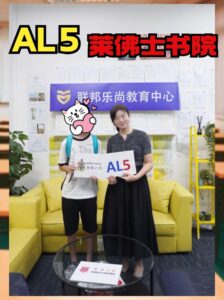
What Exactly is the PSLE?


Every student in Singapore experiences the Primary School Leaving Examination (PSLE) when they finish primary education at age 12. The Singapore Ministry of Education (MOE) and the Singapore Examinations and Assessment Board (SEAB) conduct this examination. Singapore established PSLE as its high-stakes examination to perform three essential functions within the educational framework.
- Academic Benchmark: It evaluates student’ core subject learning to measure their educational progress after completing six years at primary school.
- Streaming mechanism: The examination system is a placement tool that decides what academic school tracks students can access.
- Placement tool: The national examination of the PSLE determines which secondary schools the students will attend based on their academic abilities.
The exam will be held annually from August to October, and the results will be released in late November. The test functions to determine which schools will accept students during Secondary 1 enrollment during the subsequent academic year.
Standardisation throughout the nation makes the PSLE different from traditional school tests because it gives equal assessment to all students regardless of which primary school they attend. A child’s educational path includes more than just the PSLE because this exam represents one stage among many on their academic journey, which does not automatically lead to defining their ultimate achievement levels.
Subjects Covered in PSLE
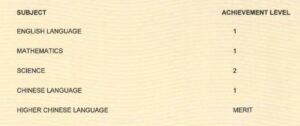
The PSLE evaluates students on four core subjects using standardised tests to measure fundamental skills and knowledge.
1. English Language
- Reading, writing, listening and speaking comprise its test content.
- The assessment includes composition tests, comprehension questions, and oral communication evaluation.
- English skills must be strong because normal schools use this language as the principal teaching method.
2. Mother Tongue Language (MTL)
- Students can select their language proficiency testing between Chinese, Malay, Tamil, or any other language the educational board approves.
- The assessment evaluates students in all three domains of reading, writing and conversation skills.
- Students can also take the Higher Mother Tongue course, which will offer benefits for some schools.
3. Mathematics
- It covers arithmetic alongside algebra, together with geometry, and also implements problem-solving methods.
- The education focuses on rational thinking skills alongside practical uses of the concept learned.
- The educational level of students determines their admission to Foundation or Standard programs.
4. Science
- Tests the understanding of life sciences, physical sciences, and experimental skills.
- Focuses on critical thinking and real-world applications.
- The curriculum is designed with different topics to build students’ essential knowledge before they start secondary education.
How is the PSLE Scored?
The complex T-score evaluation method no longer exists as Singapore moved to the Achievement Level scoring method in 2021. The Achievement Level (AL) scoring system was introduced by Singapore in 2021 to create a non-competitive environment which emphasises subject mastery instead of academic contests.
Understanding AL Scores
The Achievement Level bands AL1 to AL8 serve different score ranges, where AL1 marks between 90 to 100 score points while AL8 marks less than 20 points. The total PSLE Score extends from 4 to 32 by combining the individual subject grades. The lower the scores, the better the results. For example, students who earn a total of 4 will get top marks (AL1) in every subject because there are 4 subjects, and getting an AL1 for 4 subjects equals 4.
Here is another example of PSLE Score Calculation:
If a student scores:
- English: 82 (AL3)
- Mother Tongue: 85 (AL2)
- Math: 91 (AL1)
- Science: 88 (AL2)
Their PSLE Score = 3 + 2 + 1 + 2 = 8. (Count the number in front of AL)
The system classifies students into groups of students with the same skill level to minimise performance pressure that comes from minor mark differences.
Why Does the PSLE Matter?
The PSLE functions more than an ordinary examination because it determines three essential aspects of students’ educational paths.
1. Secondary School Placement
- PSLE test results serve to identify admission suitability for prospective secondary school students.
- Students provide their selection of preferred schools and use a merit-based admission criterion.
2. Pathway Planning
PSLE results in the past used to assign students to these three categories: Express, Normal (Academic) and Normal (Technical).
- Express – It is a 4-year course leading to the GCE OL exam
- Normal (Academic) – It is a 5-year course leading to the GCE NL exam
- Normal (Technical) – It is a 4-year course leading to the GCE N(T)L exam

However, from 2024 onwards, Full SBB replaced streaming as the new model for secondary education, thus giving students the option to pursue subjects at different academic levels (G1, G2, G3) according to their abilities. G3 is the highest group, and G1 is the lowest group. For example, A student who is stronger at mathematics can do mathematics in G3 while doing science in G2.
3. Early Exposure to Exam Structure
The PSLE provides training in discipline, time management abilities, and resilience, which are essential for succeeding both in academic settings and professional careers.

Preparing for PSLE – What Parents and Students Should Know
A successful approach to PSLE preparation includes academic disciplines and mental support for students. Students should establish solid foundations across all subjects when they begin their preparation process in Primary 5. The main focus should be concept comprehension instead of memorisation in Math and Science, specifically.
Effective preparation strategies for students include:
- Previous year examination papers give students essential practice to understand testing requirements. So, refer to them.
- The revision process depends on a well-organised schedule with scheduled breaks throughout the day. So, create a well-structured schedule.
- The practice of managing time occurs throughout mock examinations. So, do some mock exams before the test.

Effective preparation strategies for parents include:
- Open communication should remain active to minimise stress between you and your children.
- Families should create a supportive living environment for students at home.
- Recognising minor accomplishments will help build confidence. So, celebrate small achievements
Also, make sure to take care of your child’s well-being by:
- Ensuring 8-9 hours of sleep
- Encouraging physical activity
- The academic load and duration of classes need supervision to avoid eye strain from too many educational tasks. So, limit excess tuition.
Remember that PSLE matters as an examination, but it is not everything in life. Numerous Singaporean success stories came about, although their students scored below average in the system. The right approach to success consists of dedicated work and sensible studying, together with understanding that one test does not determine the value of your child.
FAQS – People Also Ask
1. Is the PSLE difficult?
Students can handle the challenging exam by putting in steady work. The educational program maintains fairness through its design, while the AL system diminishes useless academic rivalry. Based on our experience, English is the most difficult subject for students to achieve an AL1.
2. What is a good PSLE score?
Strengthened scores ranging between 4-12 create pathways for admission to top schools in Singapore. The defining factor matters most when looking for suitable educational pathways for each child.
3. What if my child doesn’t do well?
The education system of Singapore features no insurmountable barriers. Stakeholders have the option to retake courses, pursue vocational programs or change academic groups depending on their academic development. So the secret of acing PSLE is to prepare early and systematically, starting from P4. Come check out our PSLE series courses.

Common Myths About the PSLE (and the Truth!)
The PSLE exists as the subject of many misconceptions, which results in excessive pressure on students. Let’s debunk the top myths:
Myth 1: “PSLE determines your child’s entire future.”
Multiple routes exist in the Singaporean education system to achieve success. Many successful top professionals, along with entrepreneurs, achieved their success even though they scored average results in their PSLE.
Myth 2: “Only students from elite schools succeed.”
At this level, school standing demonstrated little correlation with the value of personal performance. Students from neighbourhood schools succeed in gaining entry to top universities by continuing dedicated work in secondary education and post-secondary activities.
Myth 3: “Tuition is mandatory for good results”
While not absolutely mandatory, tuition often plays a crucial role in helping students excel. Let’s be honest—Singapore’s academic environment is rigorous, and the PSLE demands a strong grasp of content, time management, and exam techniques. While schools lay a solid foundation, tuition offers targeted support that can make a real difference, especially for subjects like English, where top Achievement Levels (AL1 or AL2) are harder to attain.
Myth 4: “The new AL system makes PSLE easier.”
While the exam difficulty has remained unchanged, the scoring and evaluation system has shifted to reduce competition intensity without lowering academic standards. However, for top-performing students, the competition has in fact become even more intense—because just a one-AL difference can mean the difference between getting into a dream school or not.
Myth 5: “Poor results mean limited career options.”
The Singaporean economy places greater value on skills-based certifications and continued learning and work experience than primary school examination results.
Conclusion
The PSLE represents a major academic event, although students must understand its meaning. The standardised test does not define the entire educational path of your child and represents only a single academic checkpoint along their lifelong educational journey. The education system in Singapore has several paths to success since many accomplished professionals became successful despite their different primary school grades.
The essential thing is to develop resilience, curiosity, and a mindset that thrives on personal growth. Students need emotional backing alongside well-rounded expectations above all, even when academic preparation remains vital. Please acknowledge your child through their schooling achievements while understanding that character development and good mental health create the factual basis for lifelong success.
Need more guidance? Check out our PSLE resources and seek tutors who will create a customised study guide for your child. Education is a marathon, not a 100m sprint. It requires long-term commitment since it extends across time rather than taking place all at once. With the support of reputable tuition centres like United Lisen Education Centre, you are never alone on your PSLE learning and preparation journey.