
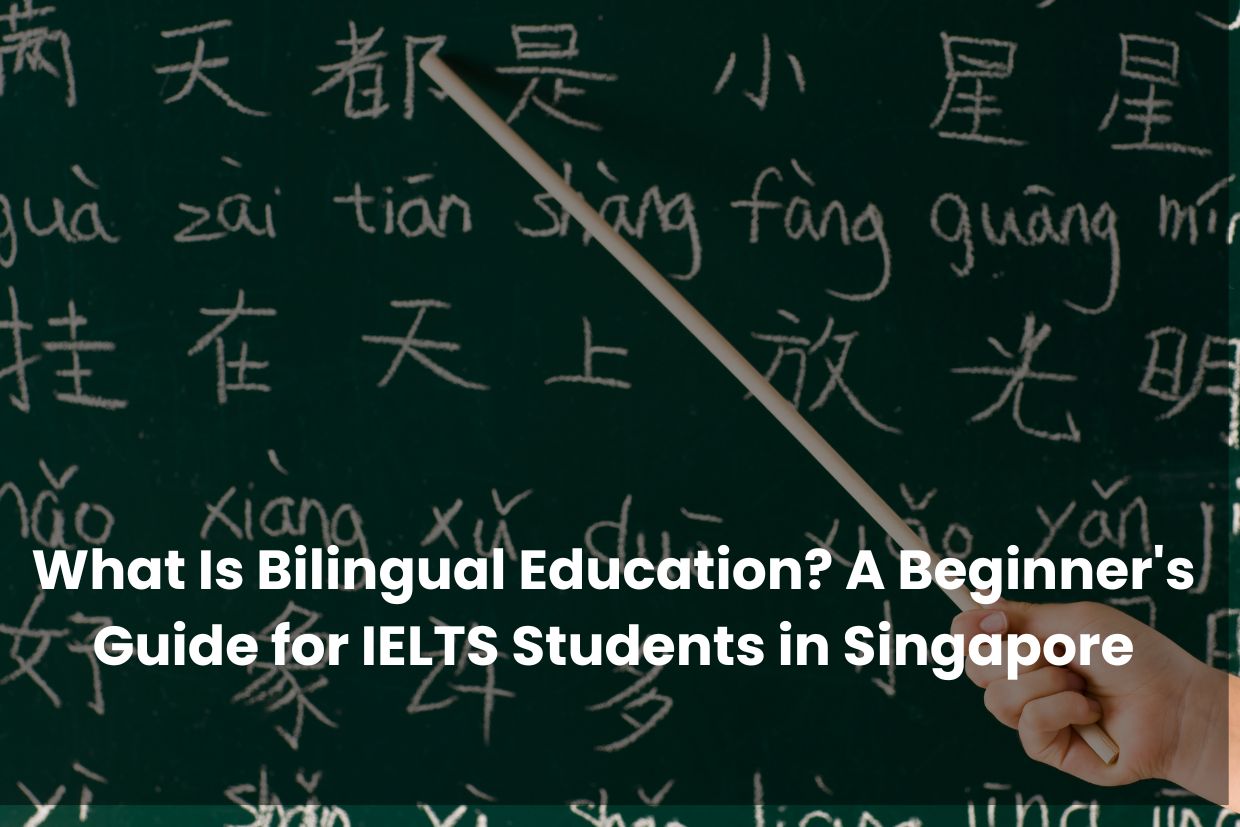
Many students preparing for IELTS in Singapore have been exposed to both English and their mother tongue language, such as Chinese, Malay, or Tamil, throughout their educational journey. But what exactly is bilingual education, and how does it impact your IELTS preparation and performance? Understanding this connection is crucial for maximizing your language learning potential and achieving your target IELTS scores.
Bilingual education can significantly influence your IELTS preparation, affecting everything from your confidence levels to your language habits and performance strategies. In this comprehensive guide, we’ll explore what bilingual education means, examine its specific advantages and challenges for IELTS students, and provide actionable strategies to transform your bilingual background into a competitive advantage rather than a barrier. Understanding these factors is crucial when selecting the best IELTS course in Singapore.
Understanding Bilingual Education in Singapore’s Context

Bilingual education refers to educational instruction delivered in two languages, typically combining English with a student’s mother tongue or a second language (L2). Singapore’s unique approach to bilingual education has been a cornerstone of the nation’s language policy since 1959, requiring all students to achieve proficiency in both English and their designated mother tongue language.
Singapore’s Bilingual Education Framework
Singapore implements a structured bilingual education approach:
- English-medium instruction: All subjects taught in English as the primary language
- Mother Tongue Language (MTL) as a compulsory subject: Mandarin, Malay, or Tamil studied alongside English
- Balanced bilingual competency: Development of proficiency in both English and the designated MTL
Singapore’s National Bilingual Policy
Singapore’s bilingual education policy requires all students to study English as the primary medium of instruction while maintaining proficiency in their ethnic mother tongue—Mandarin for Chinese students, Malay for Malay students, and Tamil for Indian students. However, research indicates that many students face challenges achieving balanced competency in both languages simultaneously, as outlined in Singapore’s official bilingual policy framework.

The Real Challenges: What IELTS Students Actually Experience
Bilingual education brings unique challenges that directly impact IELTS performance. Understanding these pain points is essential for developing effective preparation strategies.
Language Interference and Code-Switching Issues
| Language Mixing | Unconscious transfer of grammatical structures, idioms, or vocabulary from the mother tongue to English | Unnatural phrasing and grammar errors in Writing and Speaking sections |
| Pronunciation Interference | Mother tongue phonetic patterns affecting English pronunciation clarity | Reduced scores in Speaking due to clarity issues; miscomprehension in Listening |
| Limited Depth in Either Language | Surface-level exposure without developing nuanced understanding | Weaker vocabulary range and reduced ability in advanced Reading and Writing tasks |
| Unequal Language Proficiency | One language becoming dominant while the other remains underdeveloped | Insufficient English proficiency directly impacting all IELTS sections |
Understanding and avoiding these common grammar mistakes in IELTS writing is particularly crucial for bilingual students who may unconsciously transfer patterns from their mother tongue.
Cognitive Load and Processing Challenges
Research in psycholinguistics shows that bilingual students must manage constant linguistic competition between languages, which can sometimes result in slower picture naming and increased “tip-of-the-tongue” states—a phenomenon often studied under the concept of language competition. During high-pressure IELTS conditions, this cognitive load can lead to:
- Slower processing speeds during timed sections
- Increased mental fatigue during the 2.75-hour test duration
- Greater susceptibility to anxiety-induced errors
Motivation and Cultural Perception Barriers
Many students view mother tongue subjects as purely academic requirements rather than meaningful communication tools, leading to mechanical learning approaches that don’t transfer effectively to IELTS preparation. This is where understanding how English classes help non-native speakers becomes crucial for bridging the gap between academic bilingual education and practical IELTS success.

How Bilingual Education Can Enhance Your IELTS Performance
Despite the challenges, bilingual education offers significant advantages when properly leveraged for IELTS success.
Cognitive Advantages for Test Performance
Bilingual students demonstrate superior performance on tasks requiring conflict management and can better ignore competing perceptual information while focusing on relevant input. These skills directly benefit IELTS performance through:
Enhanced Executive Function: Better ability to switch between different sections and question types during the test
Improved Working Memory: Bilingual adults show enhanced memory relative to monolingual individuals, supporting better retention of listening passages and reading comprehension
Superior Task-Switching: Bilinguals excel at switching between categorization tasks, crucial for handling IELTS’s varied question formats
Metalinguistic Awareness Benefits
Bilingual education develops heightened awareness of language structures, enabling students to:
- Analyze grammatical patterns more effectively.
- Recognize subtle vocabulary distinctions and synonyms.
- Adapt language register appropriately across different IELTS tasks.
- Transfer reading strategies from the mother tongue for improved comprehension.
Cultural and Global Competency
Bilingual education fosters an understanding of diverse cultural perspectives, which enhances performance in IELTS Writing Task 2 essays that require nuanced argumentation about global issues.
Strategic Framework for Maximizing Bilingual Advantages
Transform your bilingual education background into IELTS success with these evidence-based strategies. These approaches complement proven tips for improving your IELTS results, specifically tailored for bilingual learners:

1. Language Separation and Focused Practice
English-Only Zones: Designate specific daily periods (minimum 2 hours) for exclusive English use:
- Morning IELTS practice sessions
- English-only reading and note-taking
- Speaking practice with English-only internal dialogue
Contrastive Analysis: Systematically compare language structures:
- Document recurring interference patterns in your error log
- Practice targeted exercises for identified problematic grammar transfers
- Use parallel texts to understand structural differences.
2. Targeted Pronunciation and Listening Enhancement
Shadowing Technique:
- Listen to authentic IELTS audio materials.
- Repeat immediately, focusing on rhythm and intonation patterns.
- Record yourself and compare with native speaker models.
Phonemic Awareness Training:
- Identify specific sounds affected by L1 interference.
- Practice minimal pair exercises for problematic phonemes.
- Use speech recognition software for immediate feedback.
3. Advanced Vocabulary Development
Bilingual Vocabulary Mapping:
- Create concept maps linking ideas across both languages.
- Focus on English-specific collocations and idiomatic expressions.
- Practice lexical resource expansion through themed vocabulary building.
Academic Register Development:
- Study formal academic vocabulary through discipline-specific reading.
- Practice transitioning between informal and formal language registers
- Master IELTS-specific discourse markers and connecting phrases
4. Strategic Writing Development
Process-Based Writing:
- Brainstorming: Generate ideas in your stronger language
- Outlining: Organize thoughts using English academic structures
- Drafting: Write entirely in English without translation
- Revision: Focus on eliminating L1 interference patterns
Genre-Specific Practice:
- Master IELTS Task 1 data description conventions
- Develop argumentation skills for Task 2 essays.
- Practice various letter formats for General Training.
For comprehensive writing techniques, including how to ace the IELTS writing section, bilingual students should focus on eliminating mother tongue interference patterns while building English-specific writing conventions.
5. Speaking Fluency Enhancement
Daily Speaking Routines:
- 5-minute daily “English diary” recordings
- IELTS Part 2 topic practice with 1-minute preparation
- Peer conversation exchange focused on current events.
Confidence Building:
- Join English-speaking clubs or online communities.
- Practice with IELTS-specific question banks
- Record and analyze speech patterns for self-correction
Real-World Application: Student Success Story
Consider Maria, a Singaporean student from a Chinese-speaking household who initially struggled with IELTS Writing due to direct translation patterns from Mandarin. By implementing the contrastive analysis strategy and maintaining an error log, she identified her tendency to use Chinese sentence structures in English. Through targeted practice and English-only writing sessions, she improved her Writing score from 5.5 to 7.0 within three months.

Common Misconceptions About Bilingual Education and IELTS
Myth: “Bilingual students automatically perform better on IELTS.”
Reality: Research suggests that high IELTS scores may not always accurately predict students’ actual proficiency levels, and a bilingual background requires strategic development for IELTS success.
Myth: “I should abandon my mother tongue to focus on English.”
Reality: Maintaining bilingual competency provides cognitive advantages and cultural connections while developing English proficiency.
Myth: “School English preparation is sufficient for IELTS.”
Reality: IELTS requires specific academic and test-taking skills that differ from traditional school-based English instruction.
7-Day Action Plan for Bilingual IELTS Students
Day 1: Complete diagnostic IELTS practice test and start your interference error log
Day 2: Begin 30-minute English-only reading sessions with vocabulary documentation
Day 3: Start pronunciation shadowing practice with BBC Learning English or IELTS audio materials
Day 4: Record a 5-minute speaking diary addressing IELTS Part 2 topics
Day 5: Practice contrastive grammar analysis between L1 and English structures
Day 6: Complete timed Writing Task 2 using English-only brainstorming
Day 7: Review weekly progress and adjust strategies based on identified patterns
For additional official practice materials and test registration information, visit the official IELTS website for comprehensive resources for test preparation and scheduling.
Maximizing Your Bilingual Advantage
Bilingual education doesn’t have to be a barrier to IELTS success—with a strategic approach and consistent practice, it becomes your competitive advantage. Your multicultural background provides unique cognitive flexibility, cultural awareness, and linguistic intuition that monolingual students may lack.
Remember that achieving IELTS success as a bilingual student requires understanding both your advantages and challenges. Embrace your linguistic diversity while developing focused strategies to overcome interference patterns and maximize your cognitive strengths.
By implementing these evidence-based strategies and maintaining consistent practice, you’ll transform your bilingual education background into a powerful tool for IELTS achievement. Your journey toward IELTS success starts with recognizing that bilingualism isn’t just about managing two languages—it’s about leveraging the cognitive and cultural advantages that make you a more versatile and capable English user.
Ready to maximize your bilingual advantage? Start with the 7-day action plan and track your progress systematically. With dedication and strategic practice, your bilingual education foundation will become the key to unlocking your highest IELTS potential.
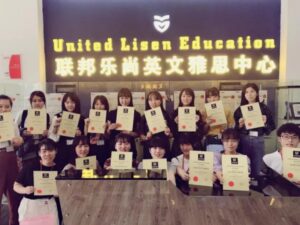
United Lisen IELTS Courses|Singapore Official Test Venue
United Lisen has over a decade of experience in IELTS training, specialising in both bilingual (Chinese-English) and full-English instruction. We know the challenges of bilingual learners and provide the right balance of support and immersion, helping beginners build confidence while guiding advanced students to aim higher.
👩🏫 Courses are tailored by level and target band: from Introductory, Intermediate, Intensive, Pre-exam Skills, Examiner-led Speaking, to VIP One-to-One. Flexible options are available online and offline, weekdays or weekends.
🏆 As the only officially designated IELTS training centre at Singapore’s IDP test venue, we offer expert teachers, proven methods, and comprehensive support. Our students’ results speak for themselves.
✨ From foundation to high band success, United Lisen ensures IELTS prep is focused, effective, and stress-free. Book your free placement test today!
Contact Us! Book English Placement Test for FREE!
Registering for an IELTS course doesn’t have to be complicated. With United Lisen, the process is quick, supportive, and entirely student-focused. Their expert team ensures you get the right course, at the right time, with the right guidance—so you can succeed on test day.
Ready to begin your IELTS journey with confidence? Contact United Lisen today for module-specific guidance and expert preparation strategies tailored to your goals.