
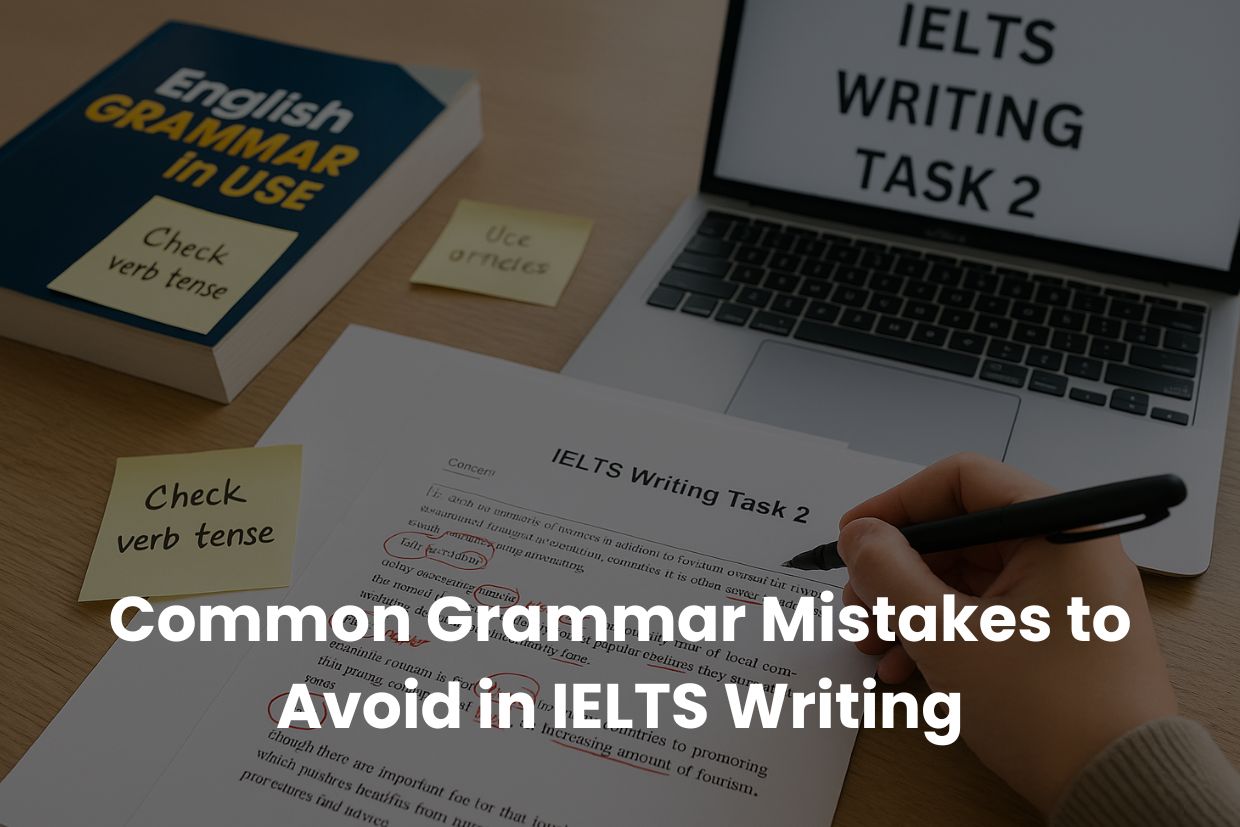
No matter how excellent the idea is, it can still lose its impact if the way it is written is poor. This fact can be particularly challenging for many individuals preparing for the IELTS test in Singapore. You could have insights that others do not yet see, a logical argument, or a unique point of view, but bad grammar will greatly lower the impact of your message. This is why many candidates seek out IELTS classes in Singapore to improve their writing skills.

Grammar plays a major role in your band score during the IELTS exam Singapore. 25% of your total writing grade is assigned for Grammatical Range and Accuracy. This means that grammar is more than just following the rules correctly. Use English in a way that reflects your skill, flexibility, and ability to be plain. Understanding the IELTS course fees in Singapore is an important consideration for those looking to invest in their English language skills.
Most students enroll in an IELTS course in Singapore in order to achieve a Band 6.5 or better. Yet, simple mistakes in grammar tend to limit what students can achieve, even if they are not noticed right away. Your ideas could be excellent, but if the grammar is incorrect, examiners will realize this. Besides lowering your Grammatical Range and Accuracy score, grammar mistakes can make your writing unclear and elaborate. Poor grammar can hurt many points in your writing, not just one specific part.
What are some of the typical grammar mistakes I should watch out for? How can you protect yourself from these? Let’s take a closer look with insights from experienced IELTS Coaches.
Why Grammar is Crucial for High IELTS Writing Scores
Candidates should realize that incorrect grammar can seriously affect their results in the IELTS exam Singapore. This is true for both IELTS Academic and IELTS General Training modules.
Direct Impact on the Grammatical Range and Accuracy Score
In Task 1 and Task 2 in IELTS Writing, your work is checked for grammatical patterns. You shouldn’t focus solely on avoiding mistakes. This suggests that you need to demonstrate flexibility and control. Accidentally making a couple of errors isn’t a problem, but if you keep making constant mistakes, it will affect your IELTS score. Many IELTS Coaches emphasize the importance of practice tests to identify and correct these errors.
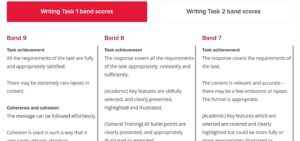
Band descriptors make things very clear. You need to write many sentences without errors and use various advanced sentence forms to achieve Band 7. Band 8 needs even more error-free sentences to fill the requirements.
Shows Your Language Proficiency and Fluency
It reflects how much English you know. Using different tenses, connectors, and sentence types correctly proves you know how to use the language. Fluency isn’t just about speaking; you need excellent grammar to write effortlessly with ease and flow. This is why many students opt for IELTS training in Singapore to improve their overall English language proficiency, including their English vocabulary.
Reduces the Risk of Miscommunication
Using the wrong word or article can completely alter what a sentence means. Notice how writing “a university” instead of “the university” suggests the point isn’t understood. Even worse, it may confuse people if your meaning is vague because of issues with sentence shape or the use of pronouns.
Making your writing clear is especially important when doing your IELTS tasks. Grammatical errors can cause your meaning to get lost. This is why many candidates choose to take an IELTS online course to practice their writing skills.
Demonstrates Control Over Complex Sentence Structures
Using more complicated forms, such as conditionals or relative clauses, can make your writing more organized and transparent. But it shouldn’t mean we lose accuracy as we try to complicate things. The ability to balance both is what makes a student’s essay stand out to examiners.
Candidates who enroll in IELTS classes in Singapore are usually trained to try different ways of doing things while ensuring that what they write or say is grammatically correct. The training a candidate gets when enrolling in an IELTS preparation course makes the difference between a Band 6 and a Band 8.
Most Common Grammar Mistakes in IELTS Writing
Experienced learners might also get caught by these errors. But if you do not follow an IELTS course in Singapore, there is a high chance that you will make these mistakes, which can take away from your credibility. An IELTS Coach can help you identify and correct these common errors, whether you’re preparing for IELTS Academic or IELTS General Training.
Subject-Verb Agreement Errors
This is one of the oldest grammar mistakes people still make.
Incorrect: The data shows interesting results.
Correct: The data show interesting results.
“Data” is plural. Using a singular verb here would not be correct, despite people generally using it like that in casual situations. More confusion often happens with collective nouns, such as “team,” “group,” or “audience,” because the verb changes whether we think of them as one unit or as a collection of individual people.

Tense Mistakes
A common cause of tense errors is changing between past and present verb forms without a need to. Students commonly write about past studies in the present tense or mix up the sequence of events in imaginary situations.
Incorrect: Researchers discovered that stress has negative effects and it increases the risk of heart diseases.
Correct: Researchers discovered that stress had negative effects and it increased the risk of heart disease.
These mistakes can be reduced by joining IELTS classes in Singapore, which will train you to perfect your tenses.
Sentence Fragments and Run-On Sentences
An incomplete thought is called a sentence fragment. A run-on sentence takes on more thoughts than one sentence should hold, making it confusing without proper punctuation.
Fragment: Even though the policy was implemented
Run-on: The policy was implemented, but it had many problems, and it was not effective
Most of the time, these errors happen when the work is rushed. The candidates try to fit in a lot of information or cannot finish their lines. These are easy for examiners to recognize.
Incorrect Use of Articles
Articles: a, an, the are deceptively complex.
Incorrect: She wants to become engineer.
Correct: She wants to become an engineer.
Incorrect: The Mount Everest is popular.
Correct: Mount Everest is popular.
In English, it is rare for mountain or institution names to take “the” unless the group or body is a collective entity.
Pronoun Reference Errors
It occurs when they are not sure who or what the pronoun refers to.
Ambiguous: When John met David, he was very happy.
Clear: John was very happy when he met David.
This type of ambiguity can make your writing look disorganized.
Misplaced Modifiers
Sometimes, mistakes with the placement of modifiers make things seem funny and distinctly unintended.
Incorrect: Driving to school, the rain started falling.
Correct: While I was driving to school, the rain started falling.
If the subject is missing or is unclear, the modifier will appear to be modifying the wrong object.
Preposition Mistakes
Many candidates struggle with common prepositions such as at, to, in, and on.
Incorrect: He is married with a doctor.
Correct: He is married to a doctor.
There isn’t one sure way here, just lots of exposure and memorization. Targeted exercises are commonly used in quality IELTS classes in Singapore to work on these skills.
Punctuation Problems
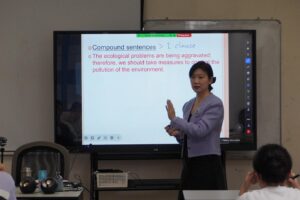
Punctuation isn’t just about commas. It means making your sentences sound and feel right with the right words and sentence structures.
Incorrect: Let’s eat Grandma.
Correct: Let’s eat, Grandma.
Poor punctuation may confuse your readers or give the impression that you are not being careful.
How to Avoid Grammar Mistakes in IELTS Writing
Avoiding grammar errors is something you get better at by noticing your mistakes and working on them yourself or enrolling in an IELTS course in Singapore. Many IELTS Coaches recommend the following strategies:
Practice with Timed Writing Tasks
Time yourself for 40 minutes for Task 2 and 20 minutes for Task 1, and try to write quickly. It allows you to practice your writing skills and make sure everything is clear. This is a common technique used in IELTS training in Singapore and in IELTS online courses.
Use Grammar Correction Tools
Having tools like Grammarly, Hemingway Editor, or LanguageTool is beneficial. They detect errors in real-time and provide explanations for them. But don’t just rely on them. Explore why it is wrong.
Keep a Grammar Journal and Learn from Your Mistakes
Whenever you get feedback or find a mistake, keep records of it. The longer you use this log, the more patterns you will notice in your writing, and you can work on the things that don’t come naturally to you.
Ask for Guidance from People Who Are Fluent in the Language
Nothing beats real, human feedback. When you join IELTS classes in Singapore, you have IELTS Coaches who go over your essays and give detailed feedback on grammar. If that’s not an option, see if you can find online groups or communities where you can practice with other people who are learning it, too.
Read Widely to Absorb Correct Grammar Naturally
Reading aloud regularly helps you notice and use correct grammar without thinking about it. Focus on well-edited materials like model IELTS essays, newspapers, and academic texts. Seeing examples of correct language use is as important as learning through lessons.
Tips to Improve Your Grammar for IELTS Writing
Learning grammar is not only about going over the same pattern again and again. IELTS experts suggest the following strategies:
Try to Use Different Sentence Structures. Try to combine sentences using simple, compound, and complex forms. You can add conditional forms, relative clauses, and passive sentences when you can use them properly.

Work on Real IELTS Writing Prompts Regularly. When you practice with genuine prompts, you get used to the structure and language you need for IELTS. As time passes, you’ll understand which grammar to use in which situations.
Avoid Slang and Overly Casual Language. Keep in mind that IELTS writing is always formal and academic in style and content. Change the more casual language to its proper counterpart. Instead of: Kids are into these days. Try: Children are increasingly attracted to digital devices.
How to Proofread Your Writing for Grammar Errors
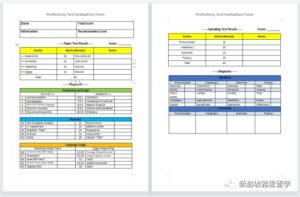
Good essays are made into great ones through proofreading. Critical errors are often noticed in the review process alone. IELTS Coaches often recommend these techniques:
Read Your Essay Aloud Speaking the words makes it easier to hear and correct sentence errors that your eyes glaze over. You can use it to spot the mistakes in how things are phrased and in punctuation.
Check for One Type of Error at a Time You do not need to identify all errors on the go. It will be more efficient to read your essay for tenses once, then for article usage, and finally for overall sentence structure. It helps to make processes more productive.
Use Checklists Whenever You Need a Quick Overview Make a checklist in advance for each time you complete a writing assignment. • Are verb tenses consistent? • Do subjects agree with their verbs? • Are articles used appropriately? • Any fragments or run-ons?
Ticking off the points on this list can help you avoid small yet expensive errors.
Focus on Common Weak Spots We all have them. It could be article usage, and it could be prepositions. Pay special focus to yours as you go through the proofreading stage.
Conclusion
Grammar may seem confusing, but you can learn through regular practice, planning, or joining IELTS classes in Singapore. Grammar is key in IELTS writing as it helps determine your qualifications and influences your results. A powerful idea can still be unclear and confusing if not wrapped in smooth and correct sentences.
If you want a Band 7 or above in IELTS, whether you study by yourself or enroll in an IELTS course in Singapore, grammar should be your daily emphasis. Practice writing under pressure, read widely, and seek feedback. Look at grammar as an advantage rather than a burden, as it plays a big role in helping you achieve success.
Start now. Pick an old essay, say it word by word, and look for the first mistake you notice in grammar. Fix it. Then, find the next one.
And if you want expert guidance and structured improvement, join United Lisen Education’s IELTS course in Singapore. Our experienced IELTS Coaches provide detailed feedback, personalized grammar training, and step-by-step writing strategies designed to help you reach your target band score. We offer courses for both IELTS Academic and IELTS General Training, with options for adult English classes and 1v1 Coaching.
📝 Ready to improve your writing and avoid grammar traps?
📞 Register today with United Lisen Education and take the next step in your IELTS journey.
Remember, whether you choose British Council Singapore or IDP IELTS Singapore for your exam, the grammar skills you develop will be invaluable. Our IELTS preparation course covers all aspects of the test, including IELTS reading, IELTS listening, and IELTS speaking, to ensure you’re fully prepared for the IELTS exam structure.


With the right IELTS training in Singapore and consistent practice, you can significantly improve your English language proficiency and achieve the IELTS score you need for your academic or professional goals.